
| Languages |
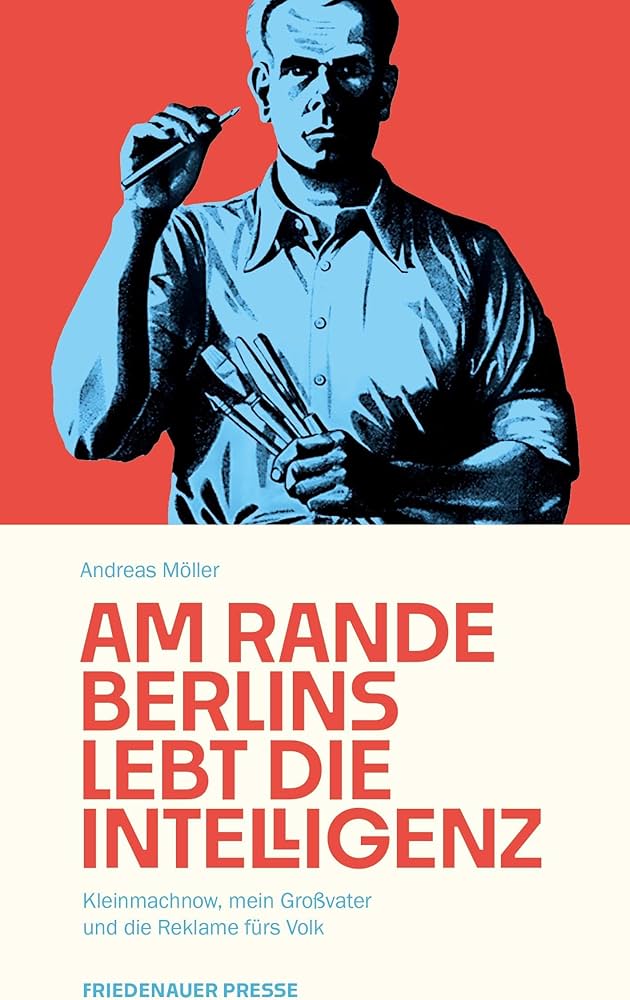
Am Rande Berlins lebt die Intelligenz
Description:
When commercial artist Andreas Nießen (1906-1996) retired to the artists' colony--already a favored retreat for UFA luminaries such as Heinz Rühmann and, later, leading "cultural figures" like Christa Wolf--he had a turbulent past behind him. From 1927 onward, he directed the in-house advertising for the influential Berlin newspaper publisher Mosse; in 1937, however, he was banned from practicing his profession due to his marriage to Ella Mayer, a Jewish woman who--following their divorce--fled to Amsterdam with their daughter and narrowly escaped deportation. He survived his deployment with a propaganda unit on the Eastern Front and, in 1954, moved with his second family to the outskirts of Berlin, where he reinvented himself as a designer of commissioned advertising for state-owned enterprises and GDR ministries. When his work was rejected as "un-socialist," he fell into the clutches of the State Security Service (Stasi), which placed him under surveillance as the ringleader of an oppositional circle of artists and intellectuals. In this context, Kleinmachnow--as a place seemingly removed from the flow of time--played a role in the social interactions of this artistic milieu comparable to that of the "Weißer Hirsch" district in Dresden for the academic community there: a place where intellectuals could insulate themselves from socialism--yet, precisely because of this insular self-segregation, remained clearly visible to the regime.
Temporarily out of stock – available within 30 to 40 business days
MARC records are available
This item belongs to following categories:
Subscribe To Get Our Latest Updates!


